


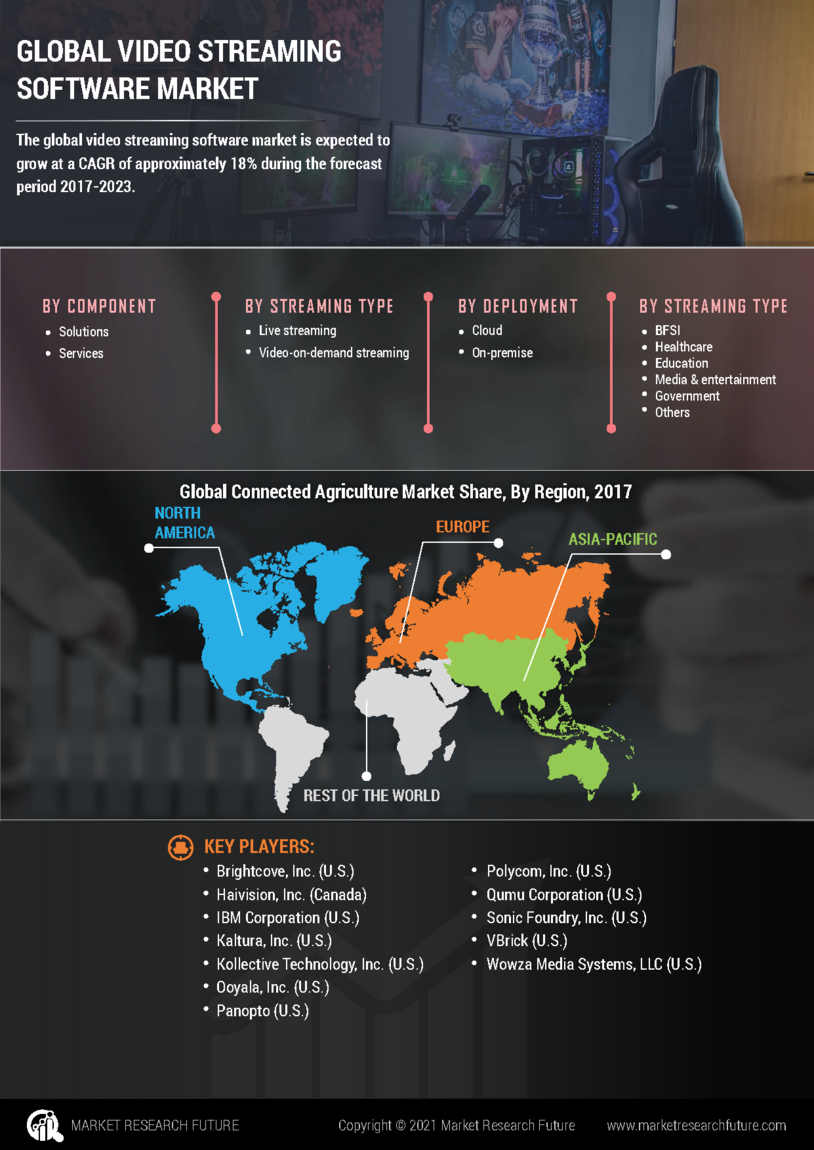
ooking ahead, the video streaming software market is poised for further transformation. Predictions suggest that advancements in technology, shifts in consumer behavior, and new business models will continue to shape the industry. This article presents expert forecasts on what the future holds for video streaming, including potential disruptions and opportunities for growth.
One prediction is the continued rise of personalized content experiences. As data analytics and machine learning technologies advance, streaming services will increasingly leverage viewer data to deliver tailored recommendations and curated content. This personalization will enhance user engagement and satisfaction, making it essential for companies to invest in these technologies to remain competitive.
Another forecast is the growth of niche streaming platforms that cater to specific audiences. As general-purpose services become saturated, companies may find success by focusing on specialized content, such as documentaries, indie films, or specific genres. These niche platforms can build loyal subscriber bases by offering unique programming that appeals to targeted demographics.
The integration of virtual reality (VR) and augmented reality (AR) into video streaming experiences is also on the horizon. As technology advances and becomes more accessible, streaming services may explore immersive content formats that allow viewers to engage with stories in new ways. This innovation could redefine the viewing experience and attract a new generation of consumers seeking interactive entertainment.
Moreover, the trend toward ad-supported streaming models is expected to continue. As subscription fatigue grows, consumers may gravitate toward free or lower-cost options that include advertising. Companies that successfully implement ad-supported tiers while maintaining user satisfaction will likely gain a competitive advantage in the evolving market.
The global expansion of streaming services is another key prediction. As internet connectivity improves in developing regions, companies will increasingly target international markets. This expansion will require localized content strategies to resonate with diverse audiences, presenting both challenges and opportunities for growth.
In conclusion, the future of the video streaming software market is marked by exciting possibilities and potential disruptions. By embracing personalization, exploring niche markets, integrating immersive technologies, adopting ad-supported models, and expanding globally, companies can position themselves for success in a rapidly changing landscape.@https://www.marketresearchfuture.com/reports/video-streaming-software-market-5228
One prediction is the continued rise of personalized content experiences. As data analytics and machine learning technologies advance, streaming services will increasingly leverage viewer data to deliver tailored recommendations and curated content. This personalization will enhance user engagement and satisfaction, making it essential for companies to invest in these technologies to remain competitive.
Another forecast is the growth of niche streaming platforms that cater to specific audiences. As general-purpose services become saturated, companies may find success by focusing on specialized content, such as documentaries, indie films, or specific genres. These niche platforms can build loyal subscriber bases by offering unique programming that appeals to targeted demographics.
The integration of virtual reality (VR) and augmented reality (AR) into video streaming experiences is also on the horizon. As technology advances and becomes more accessible, streaming services may explore immersive content formats that allow viewers to engage with stories in new ways. This innovation could redefine the viewing experience and attract a new generation of consumers seeking interactive entertainment.
Moreover, the trend toward ad-supported streaming models is expected to continue. As subscription fatigue grows, consumers may gravitate toward free or lower-cost options that include advertising. Companies that successfully implement ad-supported tiers while maintaining user satisfaction will likely gain a competitive advantage in the evolving market.
The global expansion of streaming services is another key prediction. As internet connectivity improves in developing regions, companies will increasingly target international markets. This expansion will require localized content strategies to resonate with diverse audiences, presenting both challenges and opportunities for growth.
In conclusion, the future of the video streaming software market is marked by exciting possibilities and potential disruptions. By embracing personalization, exploring niche markets, integrating immersive technologies, adopting ad-supported models, and expanding globally, companies can position themselves for success in a rapidly changing landscape.@https://www.marketresearchfuture.com/reports/video-streaming-software-market-5228
ooking ahead, the video streaming software market is poised for further transformation. Predictions suggest that advancements in technology, shifts in consumer behavior, and new business models will continue to shape the industry. This article presents expert forecasts on what the future holds for video streaming, including potential disruptions and opportunities for growth.
One prediction is the continued rise of personalized content experiences. As data analytics and machine learning technologies advance, streaming services will increasingly leverage viewer data to deliver tailored recommendations and curated content. This personalization will enhance user engagement and satisfaction, making it essential for companies to invest in these technologies to remain competitive.
Another forecast is the growth of niche streaming platforms that cater to specific audiences. As general-purpose services become saturated, companies may find success by focusing on specialized content, such as documentaries, indie films, or specific genres. These niche platforms can build loyal subscriber bases by offering unique programming that appeals to targeted demographics.
The integration of virtual reality (VR) and augmented reality (AR) into video streaming experiences is also on the horizon. As technology advances and becomes more accessible, streaming services may explore immersive content formats that allow viewers to engage with stories in new ways. This innovation could redefine the viewing experience and attract a new generation of consumers seeking interactive entertainment.
Moreover, the trend toward ad-supported streaming models is expected to continue. As subscription fatigue grows, consumers may gravitate toward free or lower-cost options that include advertising. Companies that successfully implement ad-supported tiers while maintaining user satisfaction will likely gain a competitive advantage in the evolving market.
The global expansion of streaming services is another key prediction. As internet connectivity improves in developing regions, companies will increasingly target international markets. This expansion will require localized content strategies to resonate with diverse audiences, presenting both challenges and opportunities for growth.
In conclusion, the future of the video streaming software market is marked by exciting possibilities and potential disruptions. By embracing personalization, exploring niche markets, integrating immersive technologies, adopting ad-supported models, and expanding globally, companies can position themselves for success in a rapidly changing landscape.@https://www.marketresearchfuture.com/reports/video-streaming-software-market-5228
0 Yorumlar
0 hisse senetleri
499 Views
0 önizleme

 English
 Arabic
 French
 Spanish
 Portuguese
 Deutsch
 Dutch
Dutch
 Italiano
 Russian
 Romaian
 Portuguese (Brazil)
 Greek
Greek