


How AI Software Development Helps Businesses Achieve Scalable Growth
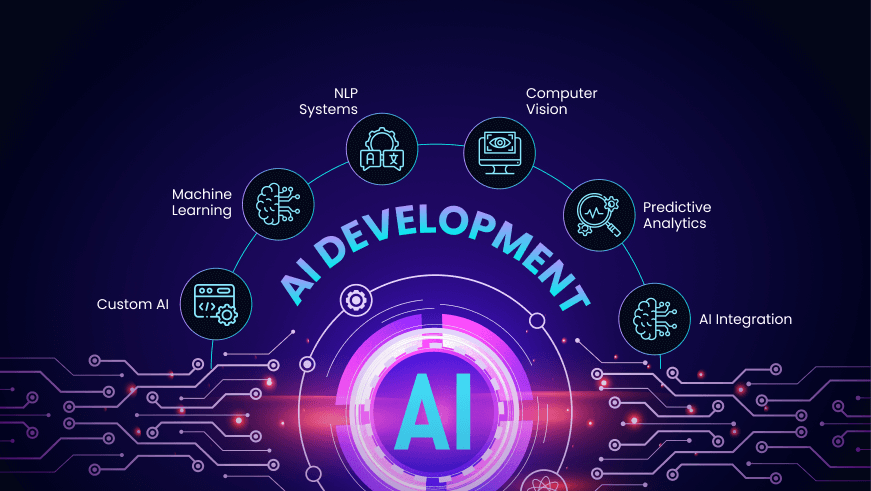
Artificial Intelligence (AI) is changing how businesses operate, compete, and grow. AI-powered software helps companies automate tasks, analyze data, and improve decision-making at scale. However, building intelligent systems internally can be complex and resource-heavy.
This is why many organizations rely on AI software development to achieve sustainable and scalable growth. AI-driven applications allow businesses to expand operations efficiently without increasing costs at the same pace.
In this article, we explain how AI software development supports business scalability, its key benefits, common use cases, and why it plays a crucial role in long-term growth.
What Is AI Software Development?
AI software development is the process of creating applications that use artificial intelligence technologies such as machine learning, natural language processing, computer vision, and predictive analytics.
These systems can:
- Learn from data
- Adapt to changing business conditions
- Automate complex workflows
- Improve performance over time
AI software differs from traditional software because it evolves continuously as it processes more information.
Why Businesses Are Turning to AI Software Solutions
Businesses across industries adopt AI software to:
- Automate repetitive processes
- Improve operational efficiency
- Gain data-driven insights
- Enhance customer experiences
- Scale operations without manual overload
AI software supports growth by enabling businesses to handle increased demand while maintaining speed, accuracy, and quality.
Top Benefits of AI Software Development for Scalable Growth
1. Improved Operational Efficiency
AI software automates routine tasks such as data entry, reporting, and workflow management. This reduces human effort and minimizes errors.
As operations grow, AI systems maintain consistent performance without requiring additional resources.
2. Faster and Smarter Decision-Making
AI-powered tools analyze large datasets in real time to identify patterns and trends. This helps businesses make faster and more accurate decisions.
Better insights support strategic planning and reduce risks during expansion.
3. Cost-Effective Scaling
Scaling manually often increases costs related to staffing, training, and infrastructure. AI software reduces these costs by handling increased workloads automatically.
This allows businesses to grow while keeping operational expenses under control.
4. Personalized Customer Experiences
AI software enables personalization by analyzing customer behavior and preferences. Businesses can deliver customized content, recommendations, and support at scale.
Personalized experiences improve engagement, satisfaction, and AI in customer support.
5. Flexible and Scalable Systems
AI applications are designed to scale with business needs. Cloud-based AI systems can easily handle higher user volumes and larger datasets.
This flexibility ensures long-term usability as business requirements evolve.
6. Better Accuracy and Reduced Errors
AI systems process information with high precision, reducing errors caused by manual handling. This is especially valuable in finance, operations, and analytics.
Accurate outputs help businesses maintain trust and efficiency during growth.
7. Continuous Learning and Improvement
AI software improves over time by learning from new data. This means performance and accuracy increase as the system is used more.
Continuous improvement ensures AI solutions remain effective as business operations expand.
Common Use Cases of AI Software in Business Growth
AI software is not limited to large enterprises anymore. Today, businesses of all sizes use AI-driven applications to improve efficiency, reduce costs, and scale operations smoothly. Below are the most common and impactful ways AI software supports business growth across industries.
1. Business Process Automation
One of the most popular use cases of AI software is automating repetitive and time-consuming tasks. These include data entry, invoice processing, payroll management, and workflow approvals.
By automating such processes, businesses reduce manual effort, minimize errors, and speed up daily operations. This allows teams to focus on strategic and creative tasks that contribute directly to growth.
2. Customer Support and Service Automation
AI-powered chatbots and virtual assistants help businesses provide 24/7 customer support. These systems can handle frequently asked questions, order tracking, appointment scheduling, and basic troubleshooting.
As customer demand increases, AI software ensures fast response times without the need to hire additional support staff. This improves customer satisfaction while keeping support costs under control.
3. Sales Forecasting and Demand Prediction
AI software analyzes historical sales data, market trends, and customer behavior to predict future demand. This helps businesses plan inventory, production, and staffing more accurately.
Accurate forecasting reduces overstocking or shortages and enables businesses to scale operations based on real data rather than guesswork.
4. Marketing Automation and Personalization
AI-driven marketing tools analyze customer preferences, browsing behavior, and purchase history. Based on this data, businesses can create personalized email campaigns, targeted ads, and product recommendations.
Personalization increases engagement, improves conversion rates, and strengthens customer relationships—key factors for sustainable business growth.
5. Data Analysis and Business Intelligence
Modern businesses generate massive amounts of data. AI software processes this data quickly and identifies patterns, trends, and insights that humans may overlook.
These insights help leaders make informed decisions related to pricing, product development, customer experience, and expansion strategies.
6. Supply Chain and Inventory Management
AI software improves supply chain efficiency by predicting demand, optimizing logistics routes, and monitoring inventory levels in real time.
This reduces delays, lowers storage costs, and ensures products are available when customers need them—supporting smooth business expansion.
How to Choose the Right AI Software Development Partner
When adopting AI software, businesses should:
- Identify clear goals and use cases
- Choose scalable and secure solutions
- Ensure compatibility with existing systems
- Plan for long-term support and updates
A structured approach ensures AI software delivers measurable growth outcomes.
Conclusion
AI software development helps businesses achieve scalable growth by improving efficiency, reducing costs, and enabling smarter decision-making. AI-powered systems support automation, personalization, and data-driven strategies across departments.
By adopting AI software solutions, businesses can scale operations smoothly, adapt to market changes, and build a strong foundation for long-term success.
FAQs
1. How does AI software support business scalability?
AI software automates processes, analyzes data, and handles increased workloads without proportional cost increases.
2. Is AI software suitable for small businesses?
Yes, AI solutions can be scaled according to business size and needs, making them suitable for small and growing companies.
3. What industries benefit most from AI software development?
Industries such as retail, finance, healthcare, manufacturing, and logistics benefit significantly from AI-driven systems.

 English
 Arabic
 French
 Spanish
 Deutsch
 Turkish
 Dutch
Dutch
 Italiano
 Russian
 Romaian
 Portuguese (Brazil)
 Greek
Greek